Purple Television
[04/08/2026] : Television
Jim Jarmusch & Alexandra Cabral Discuss Her Upcoming Feature Film, “The Story of Eve”
The film follows a Hollywood actress in exile after a scandal, retreating to a Greek island. Shot between Los Angeles and Sifnos, the film adopts a handmade approach, blending contemporary music and a spontaneous visual language, discussed through a conversation with our dear friend Jim Jarmusch.
Portaits by Carl Lovestrand
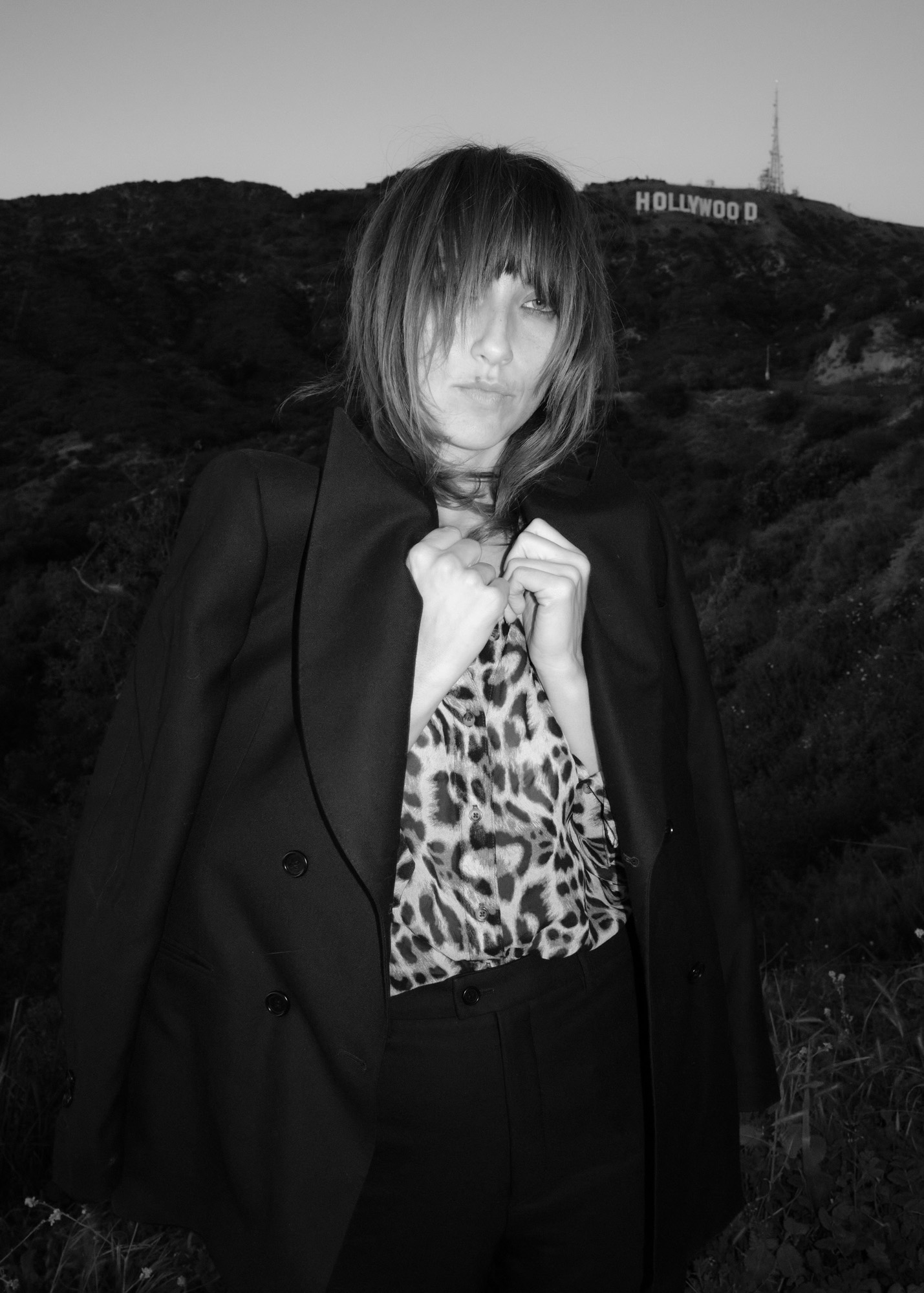
Jim Jamusch: So, it’s The Story of Eve?
Alexandra Cabral: Yes, it’s the title of my new feature. It’s about a Hollywood starlet who has a big scandal erupt in her career and is forced into exile. She runs away to this island with her young lover and biggest fan to escape it all.
Jim Jarmusch: I’ve been sort of following your procedure for like a year now and you shot in LA and then in Greece…
Alexandra Cabral: I’m really inspired by filmmakers like Eric Rohmer who early on in their career would go to these remote places and film with a small crew. I wanted the act of making the film to be as beautiful as the film itself. I pulled together a crew of friends and collaborators who are really passionate about filmmaking. We went to Sifnos, Greece, and we worked for a month. There were ten of us living on this compound in the fall and the island was completely empty aside from the locals. It’s an entirely self-produced project, I’ve just had to piece all these bits together of the Hollywood part of the story whenever I’m in LA. I really just want to direct summer films. I just want that to be my genre.

Jim Jarmusch: You are a photographer, a filmmaker, a musician. What’s the music in The Story of Eve?
Alexandra Cabral: The film looks like it should have some Italian soundtrack from the 1960s made by Piero Piccioni or something. However, I see the pairing of sound and visuals as a collage. So there’s a track from my former band, Escape-ism. A guy Saul Adamczewski who’s in a band called Fat White Family has some experimental jazz tracks in it, as well as my friend Stephan from Soundwalk Collective. My friends Zumi and Cole who have a band called Crush have a track in it. And there’s an Ariel Pink song as well. So it’s a lot of contemporary, specifically Los Angeles musicians who make up the soundtrack. My life is shaped by my love for music, so I wanted to include my community of incredibly talented musicians in the film.
Jim Jarmusch: I just wondered if you could talk a little bit about that inspiration of nudity in cinema and in fashion. You kind of revitalize a kind of soft core aesthetic.
Alexandra Cabral: Nudity represents a sort of freedom. I love that. In this film specifically, there’s no female nudity, just male nudity. When Duncan is naked it actually represents a loss of identity. So there’s these absurd shots of him walking through the island under the hot sun and skinny dipping at night. It’s a kind of return to the Garden of Eden in a way.
Jim Jarmusch: I wanna talk too about your style too which is striking to me. I love that your photographs are offhand. They are kind of anti-formal or anti-symmetrical in a way. There’s a casualness in the angles and compositions that imparts a sensuality of not being constricted.
Alexandra Cabral: I’m a complete extrovert – I really thrive off connecting and collaborating – whether it’s on an intimate photo shoot or on a large set. I get into a kind of state of ecstasy. When I’m photographing someone, I try to bring out a feeling of lightness. I want the subject to lose themselves and for the images to capture a sense of freedom.
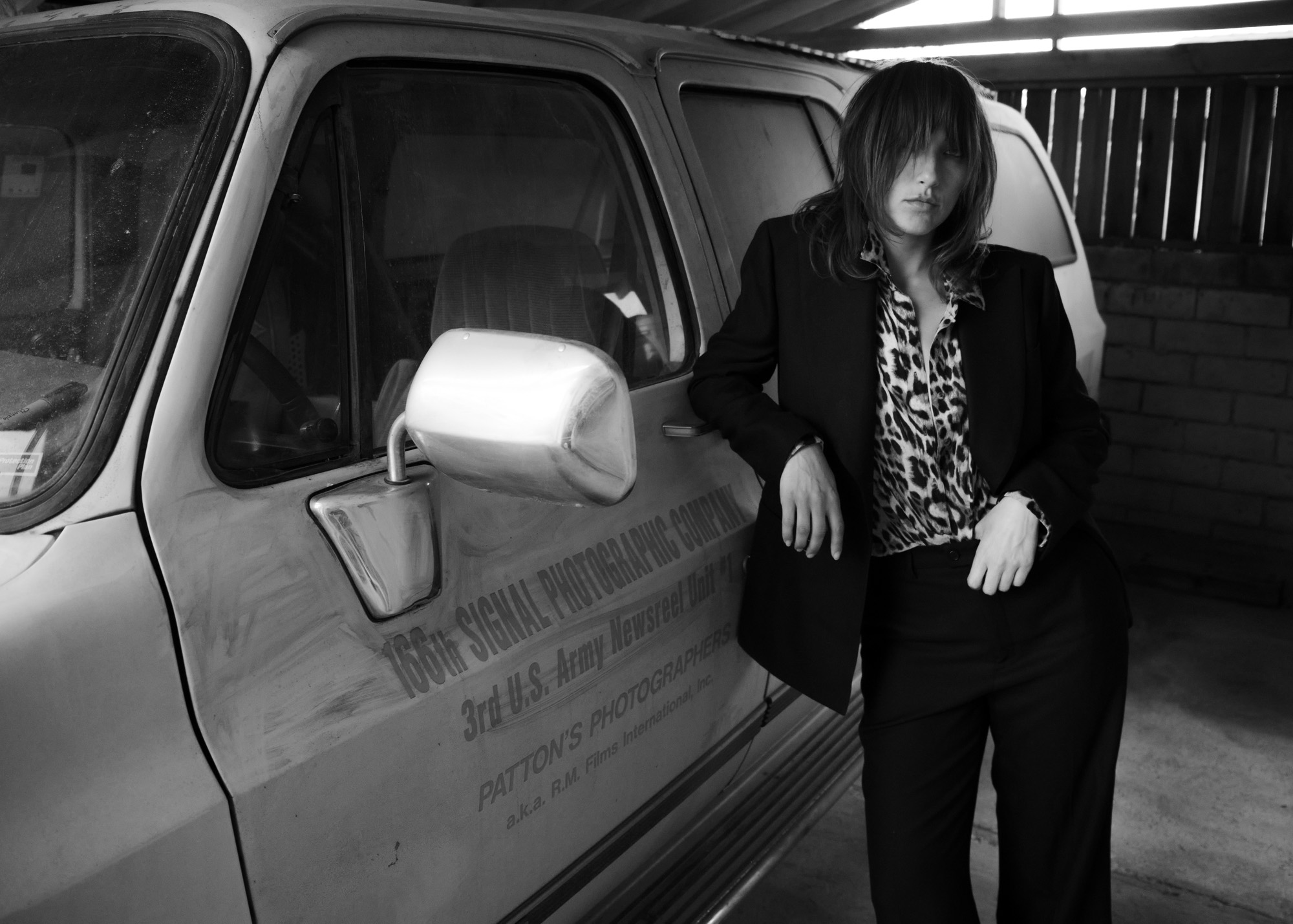
Jim Jarmusch: Well, you know, they’re not imitative of snapshots and they’re not overly composed or aestheticized in a kind of imposed way. What do you think about fashion versus style?
Alexandra Cabral: Style to me is everything. I don’t care really about fashion. I don’t like the idea of buying new clothes and everyone knowing what the price tag is.
Jim Jarmusch: You made your film yourself. It’s a handmade film with collaborators. You did a lot of stuff with Ian Svenonius, of the Make-up and now Escapism-ism, he’s sort of our mutual college. You come from something very non-mainstream- but you’re able to work for YSL or other brands and to take your own aesthetic into your commercial photographs and filmmaking. How do you make it work with the non-mainstream inclinations?
Alexandra Cabral: To start, I just never really take things too seriously. So that’s kind of how I enter any commercial setting. I mean I work in film and fashion. It’s the best job ever. It’s such a gift with all the tragedy in the world. So I always approach it with total gratitude.
Jim Jarmusch: There’s that kind of spontaneity and offhandedness in your work. It’s not being precise or calculated, but finding that energy and creating.
Alexandra Cabral: Yeah, it’s about the energy. And also the kind of confidence to withhold.